
Best SEO Tools: How to Choose the Right One for Your Business in 2026
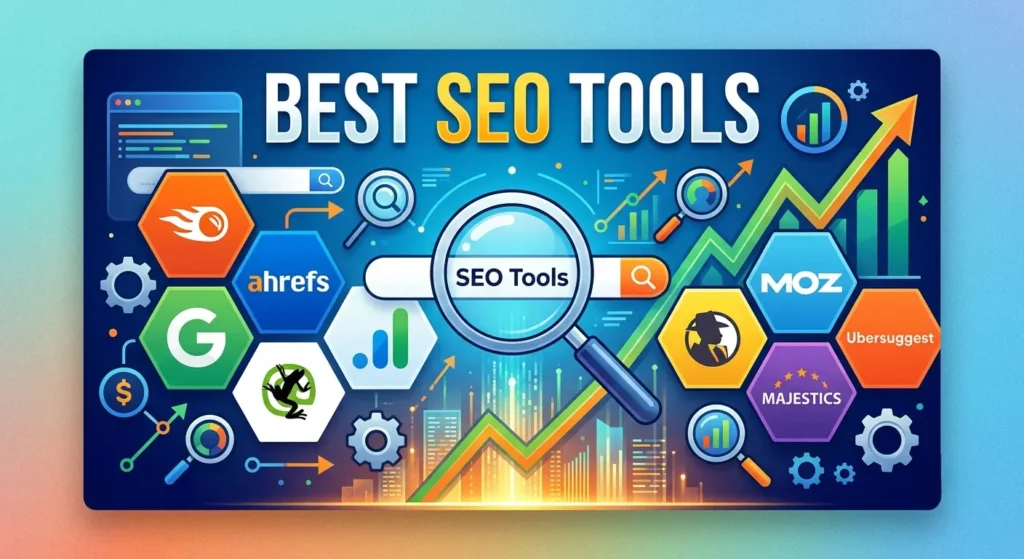
Search for “best seo tool” and you will find dozens of listicles ranking the same handful of platforms. The problem is that ranking lists do not tell you whether a tool actually fits your business. A solo tradesperson optimising one local page has completely different needs to an agency managing reports for twenty clients. This guide skips the generic rankings and instead walks through how to evaluate SEO tools based on what you are actually trying to achieve.
If you are still building your overall SEO approach before picking tools, it is worth starting with our guide on SEO for small business, since the right tool only matters once you know what you are optimising for.
What Makes a Tool the Best SEO Tool for Your Situation
Most people search for the best seo tool or the best tool for seo before defining what problem they are solving. That order should be reversed. Before opening a comparison page, answer one question: what decision do you need this tool to help you make? Common answers include finding technical errors, identifying keyword opportunities, tracking competitor movement, or reporting performance to a client or manager. Each of these points to a different category of tool, and very few platforms do all four equally well.
Best SEO Audit Tool: Finding What Is Broken
A best seo audit tool crawls your website and flags issues such as broken links, missing metadata, duplicate pages, and slow loading templates. These are technical problems, and fixing them is foundational because search engines need to crawl and render a page properly before they can evaluate its content. If you are not familiar with what falls under this category, our article on what is technical SEO covers the basics before you run an audit.
When comparing audit tools, the names that come up most often in this category, such as Screaming Frog SEO Spider, Sitebulb, and the dedicated audit modules built into all-in-one suites like Ahrefs and Semrush, all approach crawling slightly differently. For deep-dive technical crawls, Screaming Frog remains an industry standard for raw data extraction. Other cloud-based platforms like SE Ranking or Sitebulb present findings in a simplified dashboard for non-technical users. Match the tool to who on your team will actually act on the findings.
Best SEO Keyword Research Tool: Finding What People Search For
A best seo keyword research tool shows search volume, competition level, and related terms so you can plan content around real demand rather than guesswork. The more useful keyword tools also show search intent, which tells you whether a query is informational, commercial, or transactional. Ranking for the wrong intent rarely converts, even if the traffic numbers look good on paper.
Tools such as Ahrefs (Keywords Explorer), Semrush (Keyword Magic Tool), Mangools (KWFinder), and Google Keyword Planner are commonly referenced for this purpose.Specialized tools like AlsoAsked or Keyword Insights are also widely used to map topical authority and cluster related headings. Each pulls data slightly differently, so volumes can vary between platforms for the same keyword. Treat any single number as an estimate rather than an exact figure, and look at trend direction over time rather than one snapshot.
Best SEO Reporting Tool: Proving What Is Working
A best seo reporting tool pulls rankings, traffic, and conversion data into a format that is easy to read and share. Agencies in particular rely on a best seo reporting tool for agencies to avoid manually compiling spreadsheets every month. Dedicated reporting dashboards like Looker Studio (formerly Google Data Studio), AgencyAnalytics, or niche-focused tools like SEOGets allow multi-site tracking directly via Google Search Console APIs. If you are evaluating whether to handle this in house or work with an agency that already reports on this for you, our guide on how much SEO costs in Australia outlines typical pricing structures for both approaches.
Best SEO Tool for Competitor Analysis
A best seo tool for competitor analysis shows which keywords competitors rank for and where their backlinks come from. Industry-leading intelligence platforms like Ahrefs and Semrush are dominant here due to their massive link indexes and competitor gap features. For higher-level market share tracking, enterprise platforms like Similarweb offer deep cross-channel insights.
This is most valuable as a research input, not as a copy and paste strategy. Out-ranking a competitor still comes down to better content, better technical execution, and stronger local relevance, not just knowing what they are doing.
Best Free SEO Tool vs Paid SEO Software Tool
Many businesses search for the best free seo tool before committing to a paid subscription, and that is a sensible starting point. Google Search Console and Google Analytics 4 (GA4) are free, come directly from Google, and show exactly how your site performs in real search results, including impressions, clicks, and indexing status.Similarly, Bing Webmaster Tools offers free core technical audits. They will not show competitor data or keyword volume estimates, but for a single business website, they often cover most of what you need.
Paid platforms like Semrush, Ahrefs, or budget-friendly toolsets like KeySearch add broader keyword databases, backlink indexes, and automated tracking across more pages and competitors. This becomes more valuable as the number of pages, competitors, or clients you are tracking increases. For a single small business site, a free tool combined with manual research is frequently enough.
Best Local SEO Tool for Local Businesses
Local businesses have different priorities to national or e-commerce brands. A best local seo tool should help manage your Google Business Profile, track local pack rankings, and monitor reviews.Advanced local tracking tools now monitor traditional maps alongside AI-driven local visibility (tracking how your business surfaces in ChatGPT or Perplexity local recommendations).
Platforms like BrightLocal, Local Falcon (famous for its visual geo-grid heatmaps), Whitespark, and Semrush Local excel at tracking hyper-local rankings and automating directory citations. Optimising your profile correctly is one of the highest impact actions a local business can take, and the exact steps are covered in our guide on how to optimise your Google Business Profile.
If you want a realistic timeframe for when local ranking improvements typically appear, see how long does local SEO take. Businesses operating specifically in South East Queensland can also review our page on local SEO in Brisbane for region specific context.
Best AI Tool for SEO Content Writing
AI tools are increasingly used to draft outlines, suggest headings, and check readability as part of an SEO content workflow.Specialized optimization platforms like Surfer SEO, Clearscope, and Frase analyze top-ranking competitors to suggest keyword densities and structural requirements.Meanwhile, generative tools like ChatGPT or Claude assist in creative brainstorming.
They work best as a starting point rather than a finished product. According to Google’s own guidance for generative AI search, content that provides a unique point of view and reflects genuine experience performs better than content that simply restates common knowledge already available elsewhere. An AI assisted draft still needs a human review pass that adds specific, first hand insight before it is published.
Best SEO Tool for Small Business: A Simple Way to Decide
Rather than asking which is the best seo tool overall, work through these four questions:
What specific problem am I trying to solve right now—audit, research, tracking, or reporting?
Who on my team will use the output, and do they need raw data or a simplified summary?
How many pages, competitors, or clients do I need to track?
Can a free tool answer this question, or do I genuinely need the depth a paid platform provides?
Once you have answered these, the right category of tool becomes obvious, and the specific brand becomes a minor decision rather than the main one.
Why the Best SEO Tool Still Needs a Strategy Behind It
No SEO tool ranks a website on its own. Tools surface data and flag problems. Turning that data into results still requires structuring content properly, fixing technical issues, and building relevance over time. For a breakdown of what proper on page optimisation looks like once a tool has identified opportunities, see our on page SEO guide.
FAQs on Best SEO Tools
What is the best SEO tool for beginners?
Google Search Console and Google Analytics 4 are the best starting point for beginners because they are free and show real search performance data directly from Google. A paid keyword research or audit tool can be added once you understand how your site is currently performing.
What is the best free SEO tool available right now?
Google Search Console is generally considered the best free seo tool because it comes directly from Google and reports actual search performance, including impressions, clicks, and indexing issues, rather than estimated data from a third party.
What is the best SEO audit tool for finding technical issues?
This depends on site size and platform. Larger sites typically need a dedicated crawler like Screaming Frog or Sitebulb that can scan thousands of pages, while smaller sites can often rely on audit features built into broader SEO platforms (like SE Ranking) or CMS plugins (like Yoast SEO or Rank Math). Whichever tool you choose, the audit should check page speed, broken links, duplicate content, and indexing status.
Is there a best SEO tool for small business specifically?
Small businesses generally benefit most from a lightweight keyword research tool (like Mangools or KeySearch) paired with strong Google Business Profile management via BrightLocal or Semrush Local, since most small business search queries have local intent. An expensive enterprise platform is rarely necessary at this stage.
What is the best SEO keyword research tool?
Look for a tool that reports search volume filtered specifically to your target country (using suites like Ahrefs, Semrush, or Google Keyword Planner), along with related keywords and search intent. Search behaviour varies by region, so volume data that is not localised to your market can be misleading.
How long does it take to see results after using an SEO tool?
Tools speed up research and diagnosis, but rankings still take time to move once changes are implemented. Most local SEO improvements take a few months to show measurable change. Our guide on how long does local SEO take covers typical timeframes in more detail.
Final Thoughts
There is no single best seo tool that suits every business. The better approach is matching the tool category to the specific problem you are solving, whether that is a technical audit, keyword research, competitor tracking, or client reporting. If you would rather have a team handle the strategy and tool selection while you focus on running your business, get in touch through our contact page or explore more of our services on the ibiz Solutions homepage.

Brisbane’s premier website design agency. We help local businesses establish a professional online presence with custom, responsive websites that drive results.
Serving Brisbane & Surrounding Areas
South Bank
Fortitude Valley
New Farm
West End
Paddington
Teneriffe
Milton
Spring Hill
